






Gluteus Medius and Minumus Tendon Tear and Repair
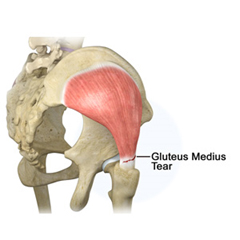
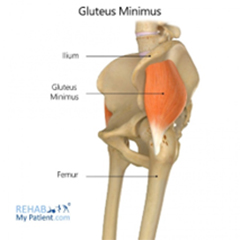
Gluteus Tendon Tear
The gluteal muscles, located in the buttock region, play a critical role in stabilizing the hip and allowing smooth, efficient movement. Two of these muscles—the gluteus medius and gluteus minimus—attach to the outer portion of the hip through strong tendons. Because of their importance in hip stability, these tendons are often referred to as the "rotator cuff of the hip."
A gluteus tendon tear occurs when one or both of these tendons become damaged or torn. Because these muscles are responsible for hip abduction (moving the leg away from the body), these injuries are also known as hip abductor tendon tears.
Causes of Gluteus Tendon Tears
Gluteus tendon tears may develop for a variety of reasons, including:
- Traumatic hip injuries or falls
- Chronic overuse or repetitive stress from sports or daily activities
- Hip tendinitis causing tendon weakening over time
- Poor muscle strength or altered hip mechanics
- Age-related degeneration of the tendon tissue
- Injury occurring during or after total hip replacement surgery
Symptoms of Gluteus Tendon Tears
Common symptoms include:
- Pain and tenderness on the outer side of the hip
- Pain that worsens when lying on the affected side
- Weakness when lifting the leg or walking
- Limping or an abnormal gait pattern
- Difficulty with prolonged standing, walking, or climbing stairs
These symptoms often overlap with hip bursitis, which is why careful evaluation is essential.
Diagnosis of Gluteus Tendon Tears
Diagnosis begins with a detailed history and physical examination of the hip, focusing on strength, gait, and areas of tenderness.
An MRI scan is typically used to confirm the diagnosis, determine the size and severity of the tear, and evaluate for associated conditions such as bursitis or tendon degeneration.
Treatment Options for Gluteus Tendon Tears
Conservative Treatment
Many partial tears and degenerative tendon conditions can be treated successfully without surgery. Conservative management may include:
- Activity modification and rest
- Anti-inflammatory medications and pain relievers
- Physical therapy focused on strengthening and improving hip mechanics
- Targeted injections to reduce inflammation when appropriate
These treatments are often effective in relieving pain and improving function.
Surgical Treatment
Surgery may be recommended when symptoms persist despite appropriate conservative care or when there is a significant tendon tear causing weakness and functional limitation. Surgical repair may be performed using either an open or minimally invasive endoscopic (arthroscopic) technique, depending on the severity and pattern of the tear.
Not all patients are candidates for minimally invasive repair, and the surgical approach is individualized based on anatomy, tendon quality, and functional goals.
Endoscopic (Arthroscopic) Gluteus Tendon Repair
When appropriate, gluteus tendon repair can be performed using minimally invasive hip arthroscopy. This technique typically involves:
- Administration of general or regional anesthesia
- Creation of several small incisions (portals) around the hip
- Insertion of an arthroscope to visualize the torn tendon
- Use of specialized instruments to prepare the tendon and bone
- Repair of the tendon using suture anchors to securely reattach it to the bone
In cases of severe tendon damage, reconstruction may be required using local tissue or a donor graft, such as an Achilles tendon allograft.
Recovery After Gluteus Tendon Repair
Recovery following gluteus tendon repair is gradual and carefully structured to protect the repair:
- Crutches are typically used for approximately 6–8 weeks to reduce stress on the tendon
- A hip brace is often utilized to protect the repair for 6 weeks
- Physical therapy will be very important after surgery and will progress in stages
- Specific movement precautions are required to prevent re-injury
- Full healing and return to higher-level activity may take up to 4 months or longer, depending on the extent of the repair
Why Choose Dr. J. Pieter Hommen at OrthoMiami for Gluteus Tendon Repair and Hip Arthroscopy?
Dr. J. Pieter Hommen is a fellowship-trained orthopedic surgeon with over 20 years of experience performing hip arthroscopy and treating complex hip and tendon disorders. At OrthoMiami, his practice focuses on accurate diagnosis, hip preservation, and individualized treatment planning.
Dr. Hommen has extensive experience managing extra-articular hip conditions, including gluteus medius and minimus tendon tears, chronic bursitis, and peritrochanteric pain syndromes that are frequently misdiagnosed or undertreated.
His philosophy emphasizes:
- Careful patient selection
- Exhausting non-operative treatment options whenever appropriate
- Minimally invasive, tissue-preserving surgical techniques when surgery is necessary
Patients choose Dr. Hommen for his:
- Fellowship training in advanced orthopedic and arthroscopic surgery
- Two decades of focused hip arthroscopy experience
- Expertise in both joint and tendon-based hip pathology
- Thoughtful, evidence-based, patient-centered approach
The goal is always to relieve pain, restore strength and stability, and help patients safely return to the activities they enjoy—without unnecessary intervention.