







Hip Arthroscopy
What Is Hip Arthroscopy?
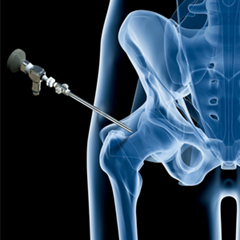
Hip arthroscopy—often referred to as minimally invasive or “keyhole” hip surgery—is a procedure in which a small camera (arthroscope) is inserted into the hip joint through tiny incisions to diagnose and treat a wide range of hip conditions at the same time.
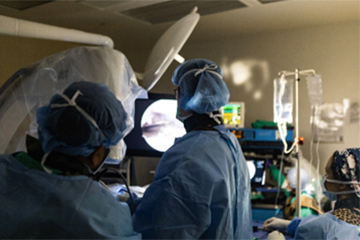
The arthroscope is a thin, fiber-optic instrument equipped with a lens, light source, and video camera. It transmits high-resolution images of the inside of the hip to a monitor, allowing the surgeon to clearly visualize cartilage, bone, tendons, and surrounding soft tissues. This enhanced visualization enables precise diagnosis and targeted treatment while minimizing disruption to healthy structures.
Indications for Hip Arthroscopy
Hip arthroscopy is used to diagnose and treat many causes of hip pain, stiffness, weakness, or mechanical symptoms that have not responded to conservative care. Common indications include:
- Femoroacetabular impingement (FAI) – correction of cam and pincer bone abnormalities
- Hip labral tears – repair or reconstruction of the labrum
- Removal of loose cartilage or bone fragments causing catching or locking
- Proximal hamstring avulsion tear repair
- Gluteus medius or minimus tendon tear repair
- Ischiofemoral impingement
- Removal of calcific tendinitis of the gluteal tendons
- Treatment of chronic peritrochanteric bursitis, including removal of inflamed bursa and painful enthesiophytes (bone spurs)
- Piriformis tendon release for piriformis syndrome and sciatic nerve entrapment
- Removal of bone spurs or excess bone growth related to arthritis or prior injury
- Partial synovectomy for inflammatory conditions of the joint lining
- Treatment of select fractures or ligament injuries caused by trauma
- Evaluation of unexplained hip pain, swelling, or stiffness when imaging and non-operative treatments have failed
Hip Arthroscopy Procedure
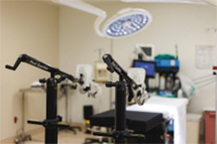
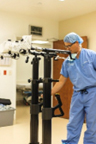
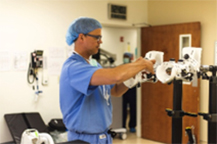
Hip arthroscopy is typically performed under regional or general anesthesia, depending on the patient and surgeon preference. A highly specialized table is used for hip arthroscopy to perform post-less arthroscopy. Two to three small incisions—usually about ¼ inch in length—are made around the hip.
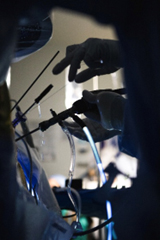
Through one incision, the arthroscope is inserted into the joint. A sterile fluid is used to gently expand the joint, creating space for visualization and instrumentation. Specialized surgical tools are introduced through the additional incisions to address the underlying condition. Once treatment is complete, the incisions are closed and covered with sterile dressings.
Advantages of Hip Arthroscopy
Compared with traditional open hip surgery, hip arthroscopy offers several important benefits:
- Smaller incisions
- Minimal disruption to muscles, tendons, and ligaments
- Less postoperative pain
- Faster recovery and rehabilitation
- Lower risk of infection
- Reduced scarring
- Earlier mobilization
- Shorter hospital or outpatient recovery time
Postoperative Care After Hip Arthroscopy
Your surgeon will provide individualized postoperative instructions to promote healing and protect the repair. These may include:
- Taking prescribed pain medications as directed
- Temporary use of crutches to limit weight-bearing
- Participation in a structured physical therapy program to restore strength, flexibility, and motion
- Maintaining a healthy diet and avoiding smoking to support tissue healing
- Avoiding heavy lifting and strenuous activities during the early recovery period
Risks and Complications of Hip Arthroscopy
While hip arthroscopy is generally safe, all surgical procedures carry some risk. Potential complications may include:
- Infection at the incision site or within the joint
- Nerve irritation or injury causing numbness, tingling, weakness, or pain
- Bleeding into the joint (hemarthrosis)
- Blood clots in the legs (deep vein thrombosis) or lungs (pulmonary embolism)
Your surgeon will review these risks with you in detail and discuss strategies to minimize complications.
Why Choose Dr. J. Pieter Hommen at OrthoMiami for Your Hip Arthroscopy?
Dr. J. Pieter Hommen is a fellowship-trained orthopedic surgeon with advanced expertise in minimally invasive hip preservation and hip arthroscopy with over 20 years of hip arthroscopy experience. His approach is centered on precision, careful patient selection, and restoring long-term hip function—not simply operating for the sake of surgery.
Dr. Hommen treats the full spectrum of intra-articular and peri-articular hip conditions using modern arthroscopic techniques, including femoroacetabular impingement (FAI), labral tears, tendon injuries, and complex sources of deep gluteal and sciatic pain. His experience extends beyond the hip joint itself to surrounding structures such as the gluteal tendons, proximal hamstring origin, piriformis tendon, and peritrochanteric space—areas that are frequently overlooked but often responsible for persistent symptoms.
A key distinction of Dr. Hommen’s philosophy is his commitment to hip preservation. Whenever possible, he emphasizes non-operative treatment and structured rehabilitation. Surgery is recommended only when it is clearly indicated and likely to improve function and quality of life. When arthroscopy is performed, it is done with meticulous attention to anatomic detail to minimize tissue disruption and optimize recovery.
Patients choose Dr. Hommen for his:
- Fellowship training and specialized focus on hip arthroscopy
- Expertise in both joint and extra-articular hip pathology
- Thoughtful, evidence-based decision-making
- Minimally invasive, tissue-sparing surgical techniques
- Clear communication and individualized care plans
Whether treating athletes, active adults, or patients with complex hip pain, Dr. Hommen’s goal is consistent: to relieve pain, restore strength and mobility, and help patients safely return to the activities they enjoy.